

The fingerboard radius is very important
for "playability" of an acoustic guitar.
The fingerboard radius makes the position of musician's hand more convenient, essentially the roundish shape of it gives a more comfortable posture. There are other things to say but I stop here because I could be denied very easily. In effect every guitarist has his posture and his preferences so I'll try to say only I think is objective about it.
The radius can be run with different measurements. Generally from 7" to 20". The measurement is related to the radius of the circumference, (see the picture).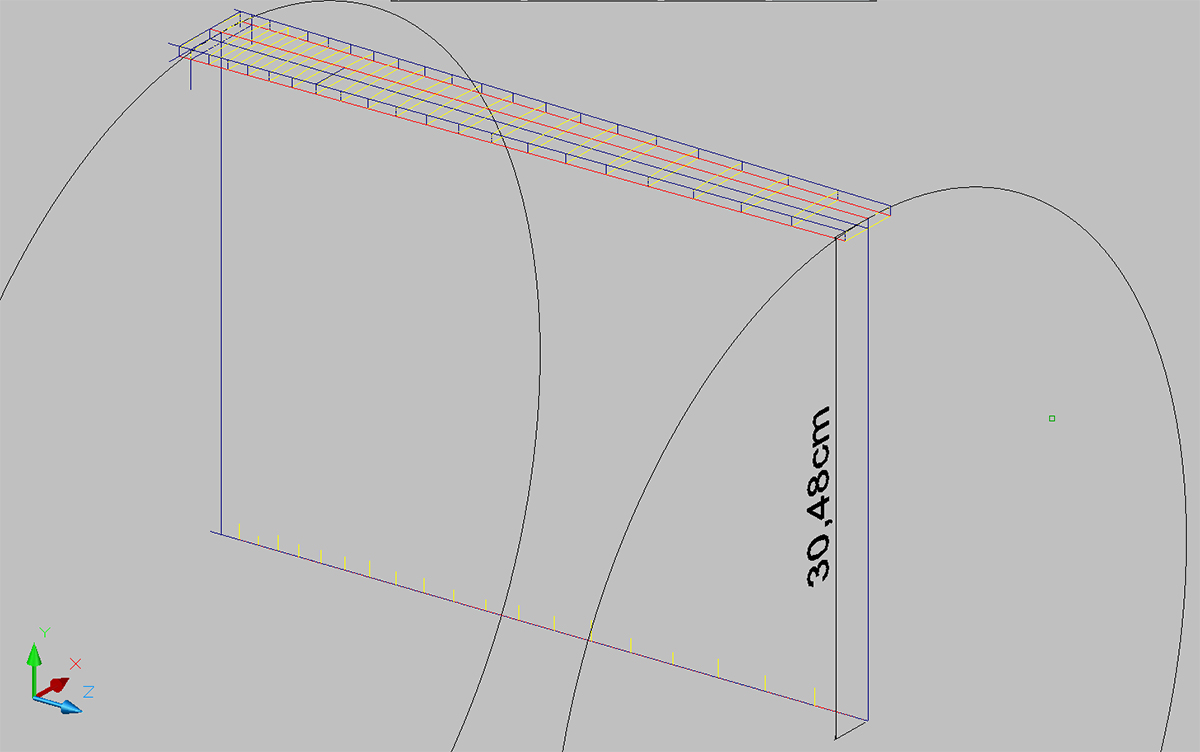 The lower the value of the radius the more accentuated will be the camber. The higher the value of the radius the curvature will be less.
The decision of measurement of the radius is taken during construction phase, following various parameters or indications.
First the musician's preference obviously. Also can be conditioned by other factors, for example considering the diapason, the action which is to be done and the strings gauge.
Usually for my fretboards I use a 12" radius, I think it's a good camber, below which I prefer not to go down.
To do this I use an aluminum radius block with a 12 "radius on which I apply sandpaper 220 grain. It is very important that the block works in axis with the fretboard, to ensure that the curvature is adjusted and uniform. I block with few screws two straight wooden boards on the bench acting as rails. The distance between them is exactly the size of the radius block. At the center I draw a line that will be the same axis of the fingerboard.
I block the fingerboard with the thin biadhesive tape on the workbench.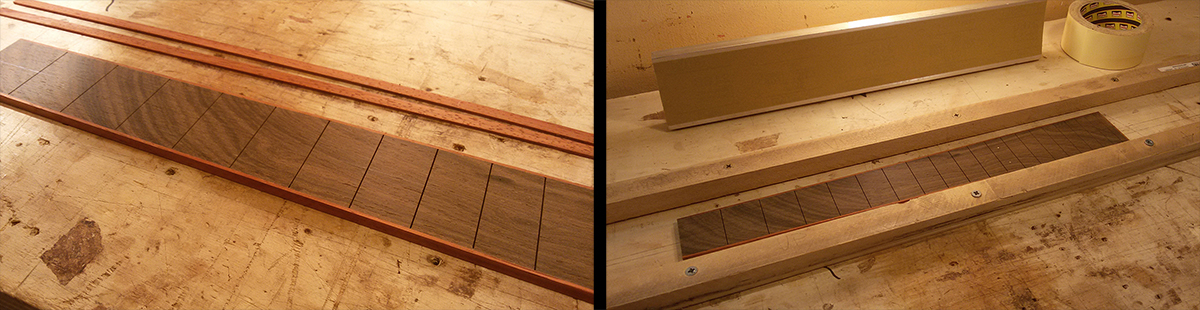 The clamps act like handle for radius block.
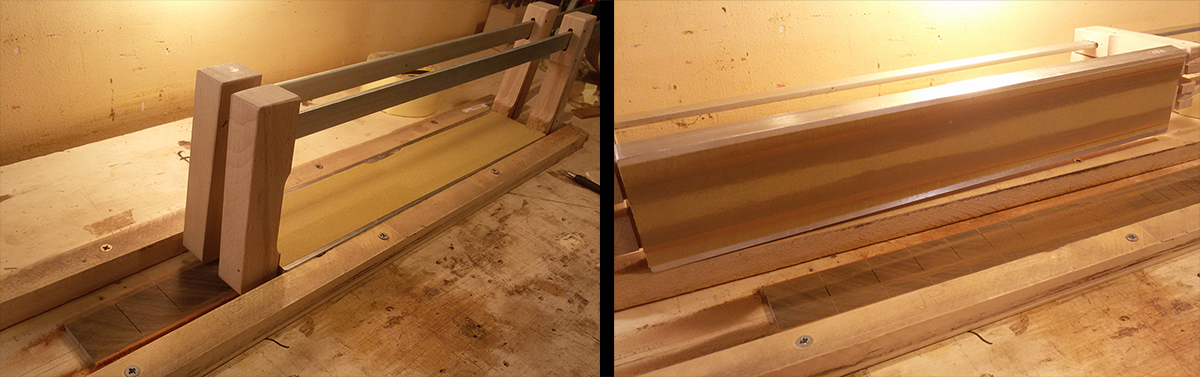 As you can see from the pictures, this work session runs after the "slotting", after possible binding and after inlays.
For any information This email address is being protected from spambots. You need JavaScript enabled to view it.
Francesco Verginelli